Static Load Testing vs. Dynamic Testing: Which Method Is Right for Your Project?

Choosing between a static pile load test and a pile dynamic load test depends on project requirements, soil conditions, budget, and construction timelines. Static testing provides the most accurate measurement of pile capacity and settlement, while dynamic testing offers faster, cost-effective results during installation. Modern foundation quality assurance also combines pile integrity testing (ASTM D5882), CSL testing (ASTM D6760), and low-strain integrity testing (ASTM D5882) to verify both structural integrity and load-bearing performance.
Why Pile Load Testing Matters
Every deep foundation project relies on one critical assumption:
Will the pile safely support the designed load throughout the life of the structure?
Without proper testing, hidden defects, insufficient capacity, or construction issues may remain undetected until they become costly failures.
Today's infrastructure projects typically use several complementary testing methods, including:
Static pile load test
Pile dynamic load test
Pile integrity test
Cross-hole sonic logging (CSL) test
Each serves a different purpose, and understanding their differences helps engineers select the right approach.
What Is a Static Pile Load Test?

A static pile load test is the industry's benchmark for measuring the actual load-bearing capacity of a foundation pile.
During the test, hydraulic jacks gradually apply increasing loads while engineers monitor settlement using precision gauges.
The results provide direct measurements of:
Ultimate pile capacity
Working load
Settlement behaviour
Elastic recovery
Safety factors
Because the pile is loaded slowly under controlled conditions, static testing delivers highly reliable performance data.
Advantages
✔ Highest accuracy
✔ Direct measurement
✔ Accepted worldwide
✔ Ideal for critical infrastructure
✔ Preferred for design verification
Limitations
Higher testing cost
Longer testing duration
Requires reaction systems
More site preparation
What Is a Pile Dynamic Load Test?

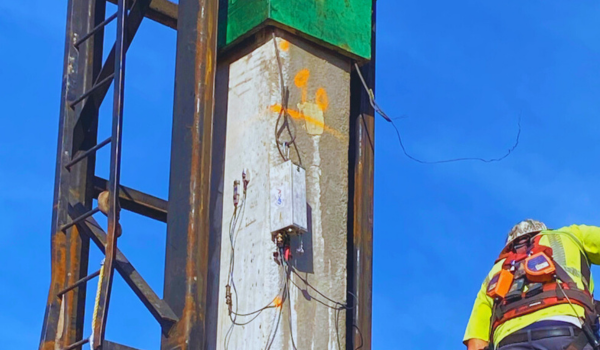
A pile dynamic load test evaluates pile performance during driving by recording stress waves generated from hammer impacts. Specialized sensors attached to the pile measure:
Force
Velocity
Energy transfer
Bearing resistance
Software such as CAPWAP or N_GAPA then estimates pile capacity.
Unlike a static pile load test, dynamic testing provides results much faster.
Benefits
Rapid testing
On-the-fly load testing as the pile is driven into the ground
Lower overall cost
No large reaction frame
Suitable for production piles
Excellent quality control tool
Limitations
Dynamic testing estimates capacity using analytical models rather than directly measuring settlement.
For highly critical structures, engineers often verify results using a static pile load test.
Static vs Dynamic Testing Comparison
Feature | Static Pile Load Test | Pile Dynamic Load Test |
Accuracy | Excellent | High |
Speed | Slow | Fast – Immediate |
Cost | Higher | Lower |
Direct capacity measurement | Yes | Estimated |
Construction delays | Longer | Minimal |
Best for | Design verification | Production testing, Driven Piles |
International acceptance | Excellent | Excellent |
Where Does a Pile Integrity Test Fit?
One common misconception is that a pile integrity test measures load capacity.
It does not.
Instead, pile integrity testing evaluates the structural condition of the pile.
It identifies defects such as:
Cracks
Necking
Voids
Bulging
Soil inclusions
Poor concrete quality
Actual length estimate
A pile may pass a load test but still contain structural defects.
For this reason, most major projects combine:
Static load testing
Dynamic testing
Pile integrity testing
ASTM D5882: Low-Strain Pile Integrity Testing
ASTM D5882 is the international standard for low-strain pile integrity testing.
The procedure involves striking the pile head with a handheld hammer while sensors record reflected stress waves.
The test helps detect:
Major cracks
Reductions in cross-section
Defective concrete
Changes in pile geometry
Advantages include:
Fast
Non-destructive
Cost-effective
Suitable for large projects
No need for CSL tubes in the pile
However, ASTM D5882 does not determine pile capacity.

CSL Testing and ASTM D6760
For drilled shafts and bored piles, CSL testing (Cross-Hole Sonic Logging) provides much greater insight into internal concrete quality.
ASTM D6760 governs this testing method.
Access tubes embedded in the reinforcement cage allow ultrasonic pulses to travel through the concrete.
The results reveal:
Honeycombing
Voids
Poor concrete consolidation
Segregation
Defects inside drilled shafts
Because the ultrasonic signal travels through the entire shaft, cross-hole sonic logging test results are far more detailed than surface-based integrity tests.
CSL test can do tomography for best view of defects
Why Many Projects Use Multiple Tests
No single testing method answers every question.
A comprehensive foundation quality assurance program often combines:
Static pile load test
Pile dynamic load test
ASTM D5882 integrity testing
ASTM D6760 CSL testing
Together they verify:
✔ Capacity
✔ Structural integrity
✔ Concrete quality
✔ Installation performance
✔ Long-term reliability
Which Method Should You Choose?
Choose a Static Pile Load Test if you need:
Maximum accuracy
Design verification
Critical infrastructure approval
Large bridge projects
High-rise construction
Choose a Pile Dynamic Load Test if you need:
Fast production testing
Lower testing costs
Installation monitoring
Large pile quantities
Routine quality control
Driven piles
Use Pile Integrity Testing (ASTM D5882) when verifying:
Structural continuity
Hidden defects
Quick Pile Integrity check
Construction workmanship
Verification for small to midsize piles
Use CSL Testing (ASTM D6760) for:
Bored piles
Any size pile foundations (Large diameter, Long, Slender)
Very long piles and slender piles
Internal concrete defect detection
Ability to present defects with 3D tomography
Best Practice: Combine Testing Methods
Leading infrastructure projects rarely rely on only one test.
Instead, engineers combine:
Static pile load testing
Dynamic testing
Pile integrity testing
CSL testing
This integrated approach reduces risk while providing greater confidence in foundation performance.
Frequently Asked Questions
What is the difference between a static pile load test and a pile dynamic load test?
A static pile load test directly measures load capacity and settlement, while a pile dynamic load test estimates capacity using stress-wave analysis during pile driving.
Is a pile integrity test the same as a load test?
No. A pile integrity test evaluates structural integrity, whereas load tests determine load-bearing capacity.
What does ASTM D5882 cover?
ASTM D5882 establishes procedures for low-strain pile integrity testing used to detect defects in concrete piles.
What is ASTM D6760?
ASTM D6760 specifies requirements for Cross-Hole Sonic Logging (CSL) testing of bored piles.
When should CSL testing be used?
CSL testing is recommended for large-diameter and length bored piles, bridges, marine structures, and critical infrastructure projects.
Can one test replace another?
No. Each test evaluates different aspects of foundation performance. Combining methods provides the most reliable quality assurance.
Which pile test is most accurate?
Static pile load testing remains the most accurate method for directly measuring pile capacity.
Why is pile integrity testing important?
Pile integrity testing helps identify hidden defects before construction progresses, reducing future structural risks, and it does that quickly and with no prior preparation. Due to the low cost of the test, 100% of the on-site piles can be tested.
Conclusion
Selecting the right testing method depends on your project's goals, budget, and foundation type. While static pile load testing remains the benchmark for verifying capacity, pile dynamic load testing offers speed and efficiency during construction. To ensure complete quality assurance, these methods should be complemented by pile integrity testing (ASTM D5882) and CSL testing (ASTM D6760), providing confidence in both structural integrity and long-term foundation performance.
Comments